


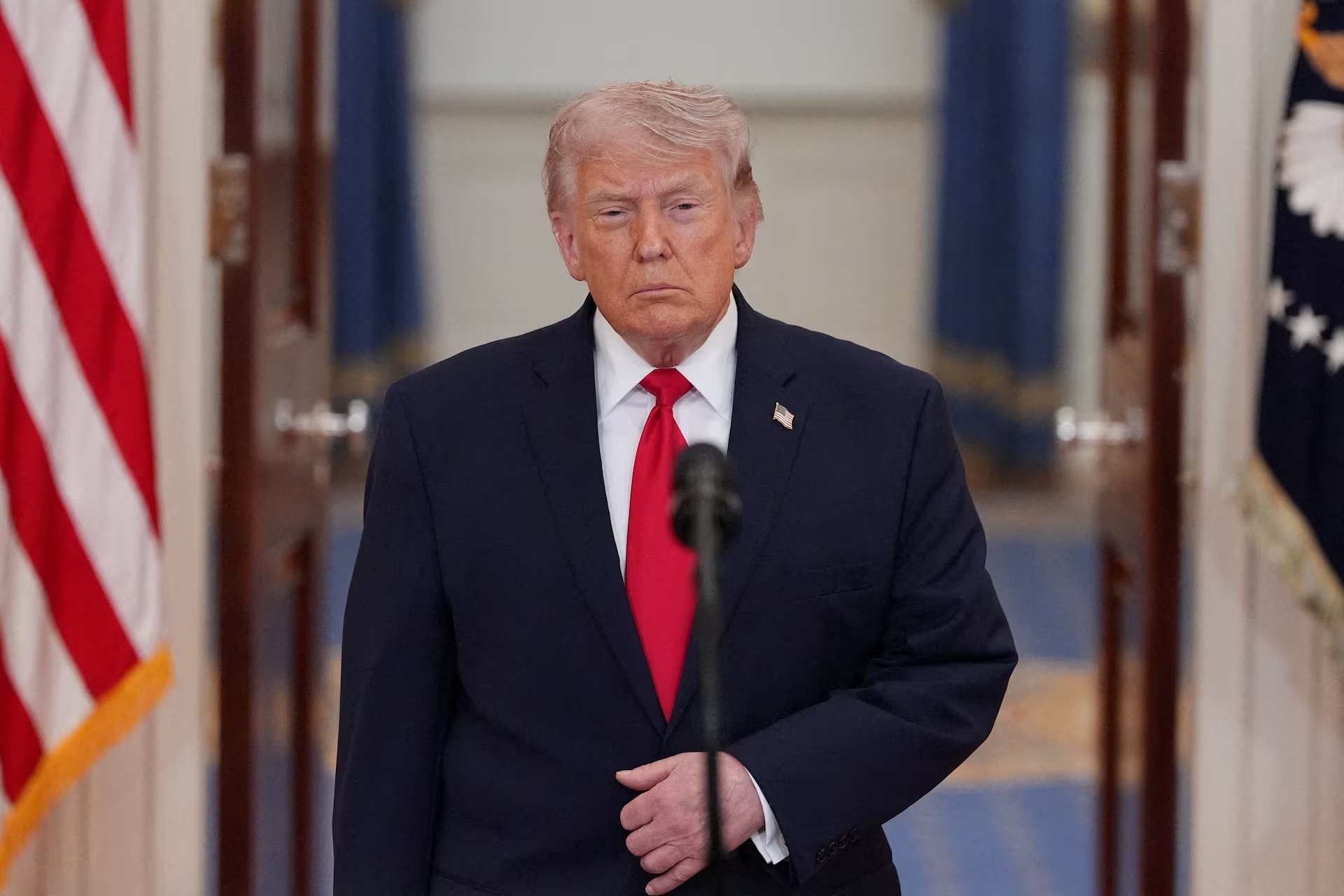
The U.S. President Donald Trump has stated that the United States will continue to apply maximum pressure on Iran, insisting that efforts to contain the country will persist “with full force” until a complete agreement is achieved between the two sides.
In his recent remarks, Trump emphasized that the U.S. would not ease its stance unless negotiations result in what he described as a “100% agreement.” This statement signals a firm and uncompromising position, reflecting a continuation of the hardline policies that characterized his administration’s approach toward Iran.
Trump suggested that significant progress has already been made in discussions, noting that “many key points have already been discussed.” However, he stressed that the process must move forward quickly, urging all parties involved to accelerate negotiations. According to him, the urgency of the situation requires swift action to finalize a deal that meets all expectations.
The US president’s comments come amid ongoing tensions between the United States and Iran over issues such as nuclear development, regional security, and economic sanctions.
During his time in office, Trump withdrew the U.S. from the 2015 nuclear agreement, also known as the Joint Comprehensive Plan of Action (JCPOA), and reimposed strict sanctions on Tehran. These measures were part of a broader “maximum pressure” campaign aimed at forcing Iran to renegotiate the terms of the deal.
Trump’s latest statement suggests that he continues to support a similar strategy, relying on sustained economic and political pressure to bring Iran to the negotiating table under conditions favorable to the United States.
Analysts note that such a position could complicate diplomatic efforts, as Iran has often resisted negotiations conducted under pressure. At the same time, Trump’s insistence on a “complete” agreement indicates a desire for a broader deal that addresses not only nuclear concerns but also other issues such as missile programs and regional influence.
The call for faster progress also reflects growing international concern over delays in reaching a resolution. Prolonged uncertainty has heightened tensions in the Middle East and raised fears about the potential escalation of conflict.
While it remains unclear how current U.S. leadership or international partners will respond to Trump’s remarks, his statements highlight the ongoing debate over the best approach to dealing with Iran. Whether through continued pressure or renewed diplomacy, the path toward a lasting agreement remains complex and uncertain.
As discussions continue, the world will be watching closely to see whether the parties involved can bridge their differences and reach a comprehensive deal that ensures stability and security in the region.